The Philosophy

The Circular System

Nothing is wasted. Everything regenerates.

The System

A self-sustaining, hyper-locally connected homestead built on one principle: the output of one element becomes the input of another. Nothing is wasted. Everything has purpose.

People
Plants
Animals
Water
Soil
Electricity
Internet
Spirit
Circular
Flow

Every element feeds another:
Food — Water — Sunlight

Every animal and plant has purpose in the system. Each requires inputs and produces outputs. We arrange them so the cycle flows — nothing wasted, everything regenerated.

The 8 Core Elements
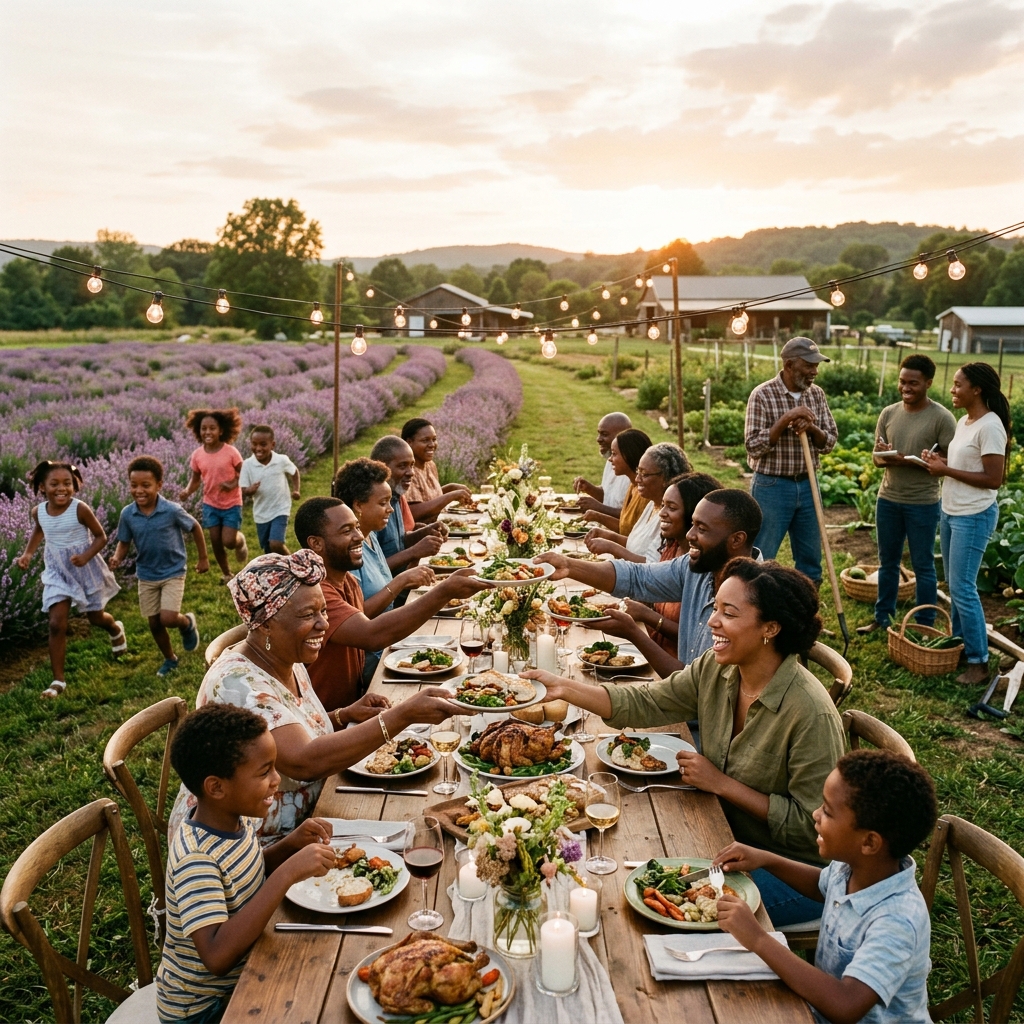
People — community and labor

People

Community, labor, education, mentorship. Work inputs fulfilled by people — the heart of every system.
Inputs: Training, food, shelter, purpose
Outputs: Labor, knowledge, community, generational wealth
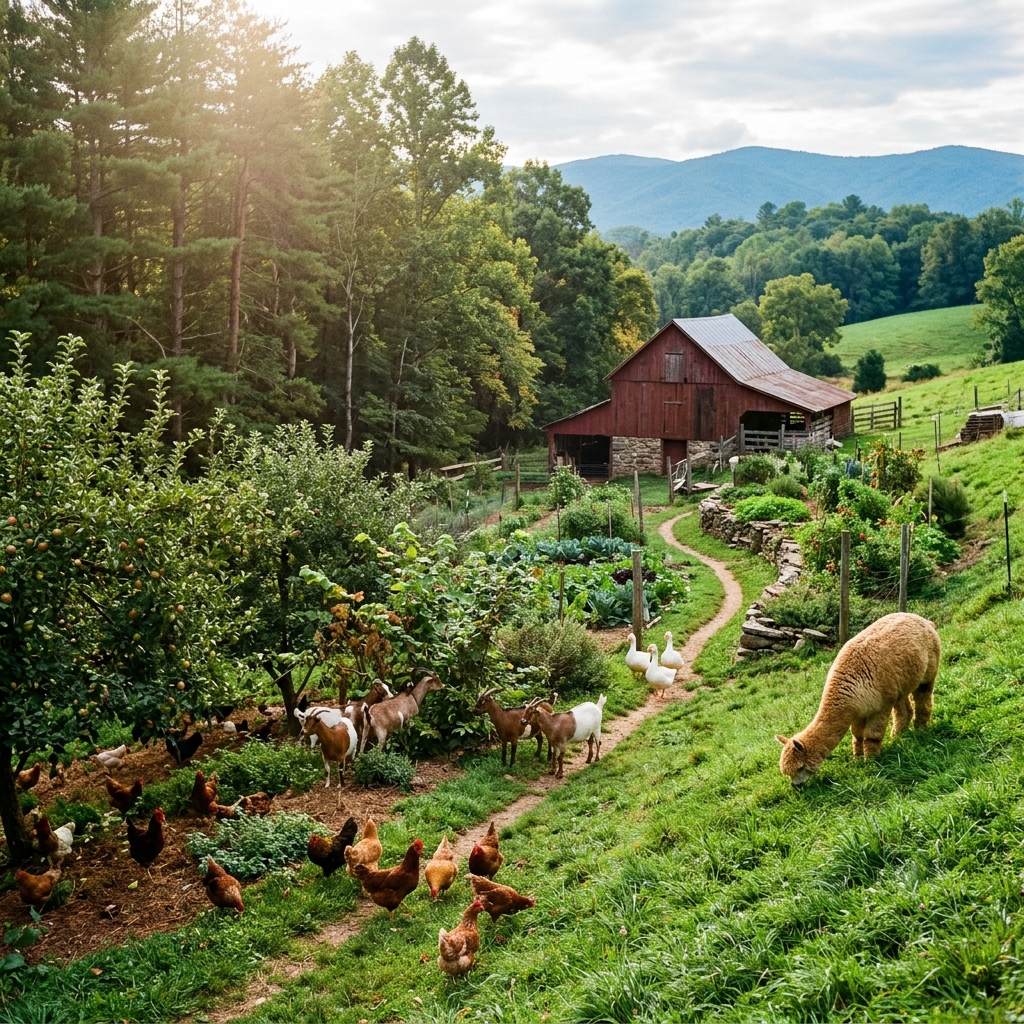
Animals — goats, chickens, alpaca

Animals

Goats, chickens, geese, alpaca — each with controlled routes through the food forest, managing the landscape.
Inputs: Food forest forage, shelter, water
Outputs: Fertilizer, pest control, fiber, eggs, land management
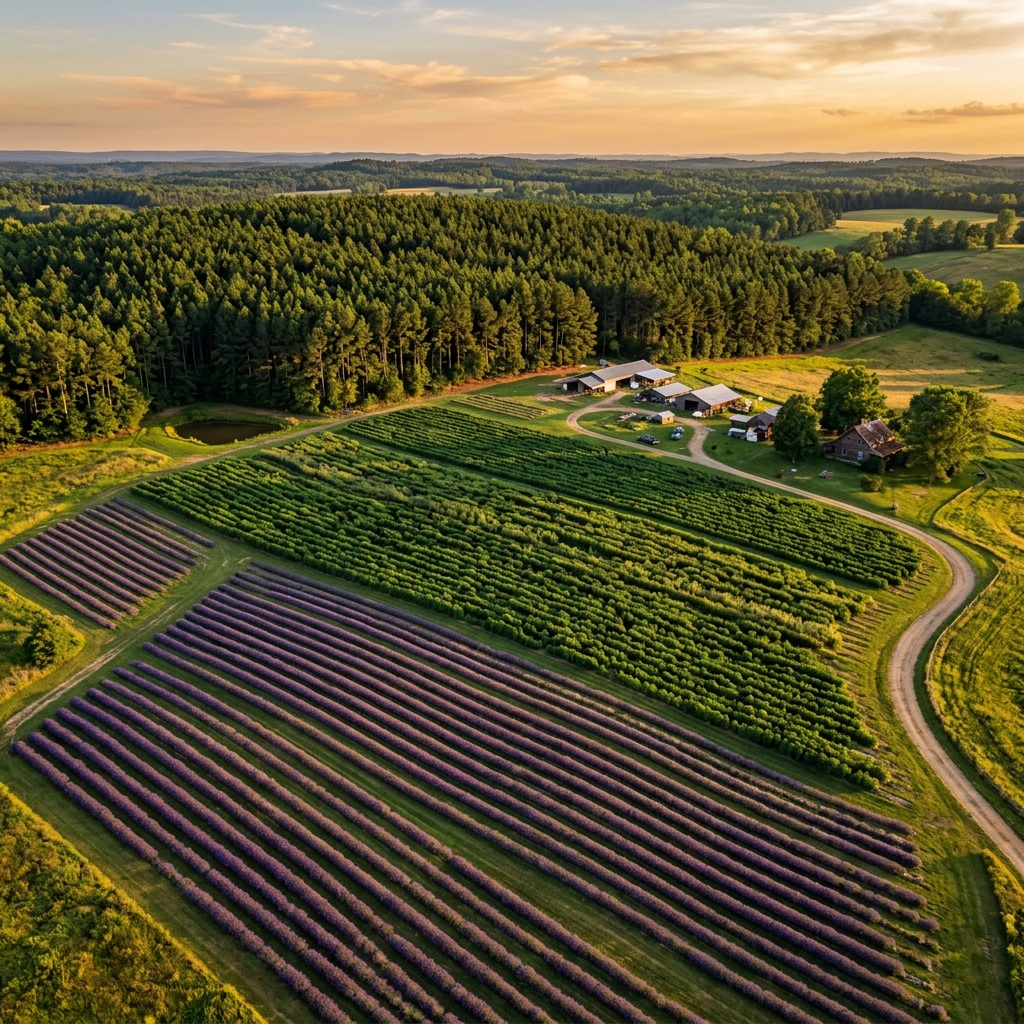
Plants — lavender, pine, hemp

Plants

Lavender + support plants, 30-acre pine forest (truffles, ginger), hemp for training and 25,000+ products.
Inputs: Soil, water, sunlight, composted animal outputs
Outputs: Products, food, medicine, building materials, animal forage
Soil and earth

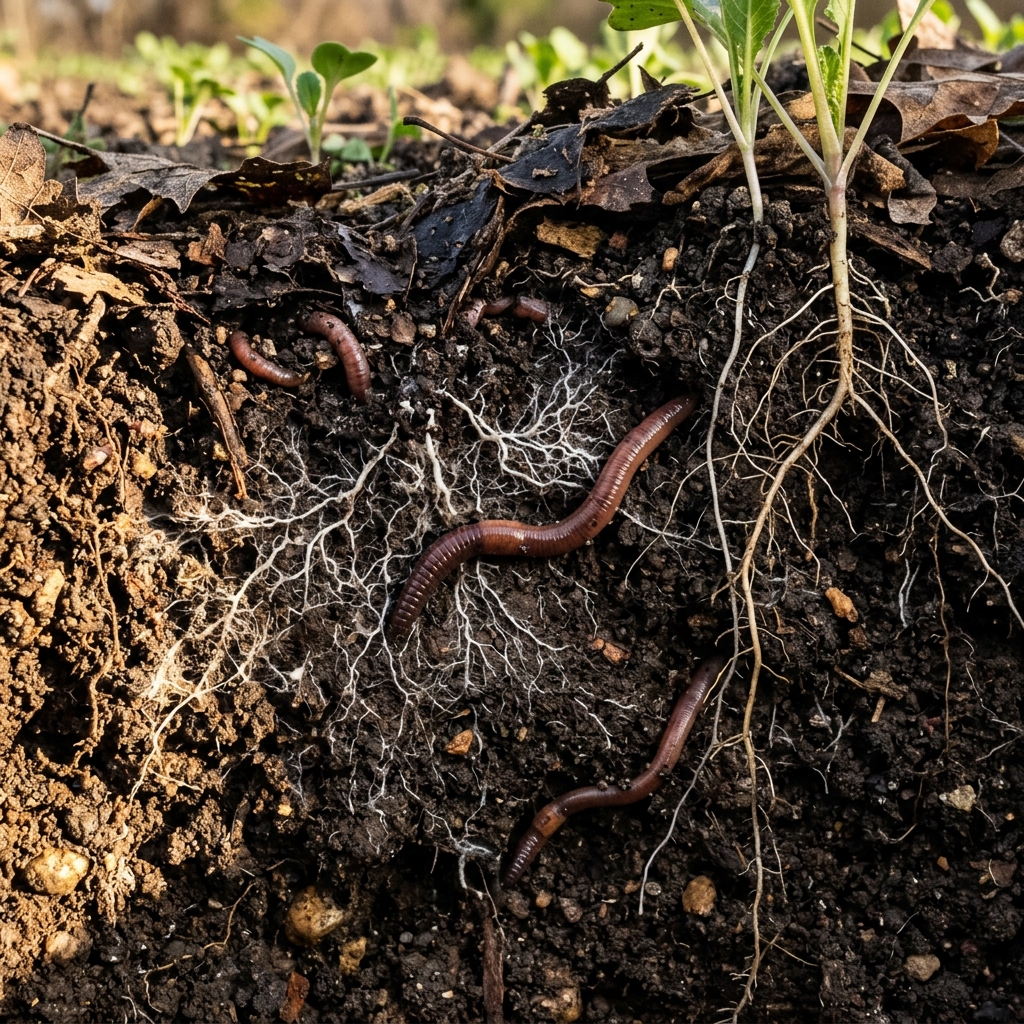
Soil / Earth

The living foundation. Composting, mycelium networks, nutrient cycling — turning waste into fertility.
Inputs: Compost, animal waste, fallen leaves, cover crops
Outputs: Fertile growing medium, carbon sequestration, water filtration
Water connects everything

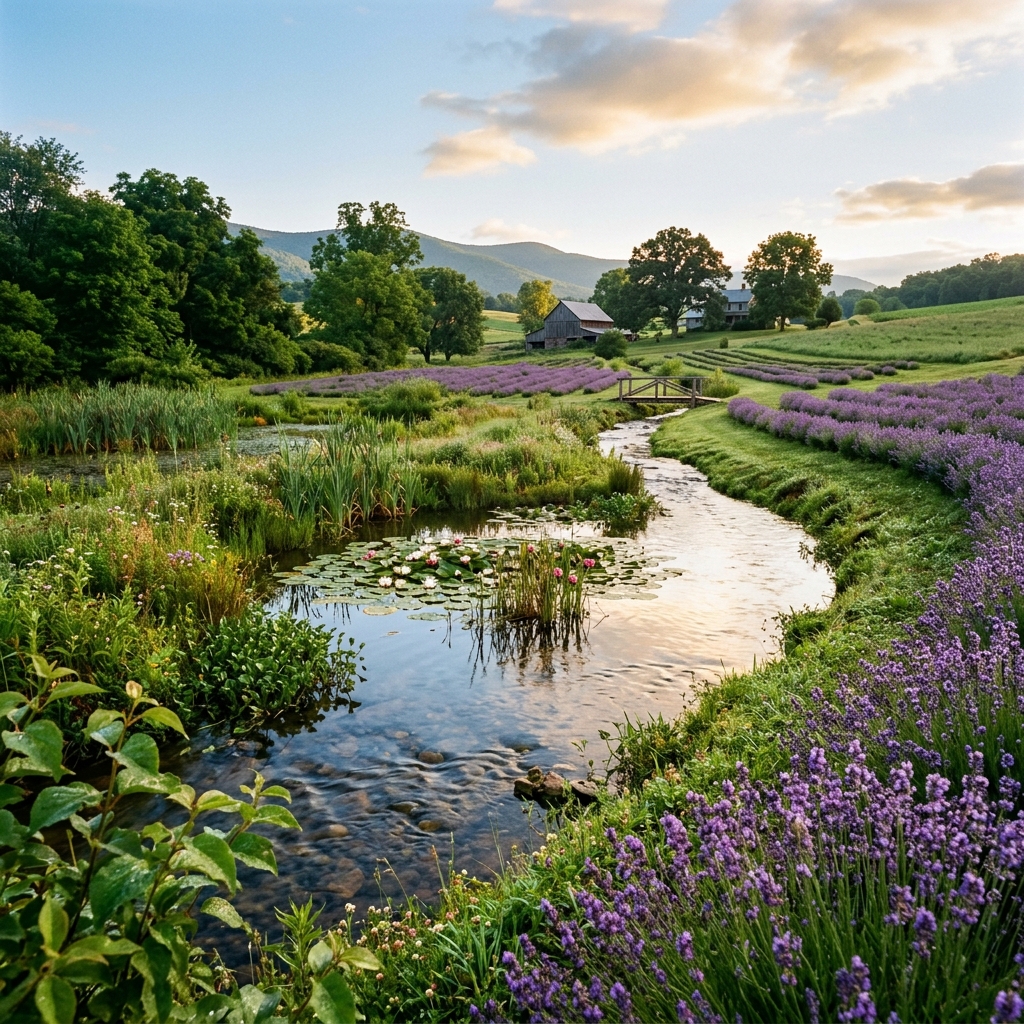
Water

The element that connects everything. Streams, wetlands, irrigation — water flows through every system on the farm.
Inputs: Rain, springs, wetland filtration
Outputs: Irrigation, animal hydration, ecosystem health, beauty
Off-grid electricity

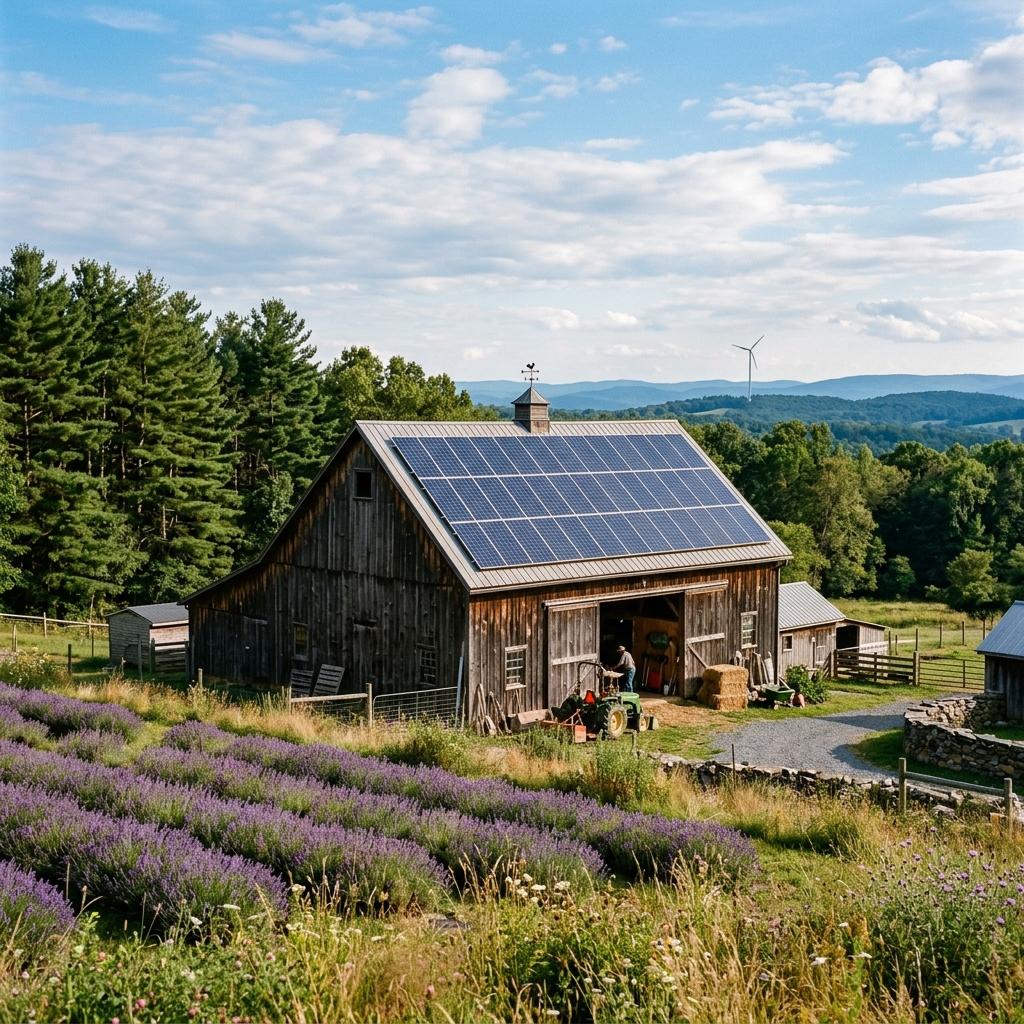
Electricity

Off-grid energy independence. Solar, wind, and hemp biomass fuel powering the homestead sustainably.
Inputs: Sunlight, wind, hemp biomass
Outputs: Power for operations, lighting, processing, connectivity
Connected farm platform

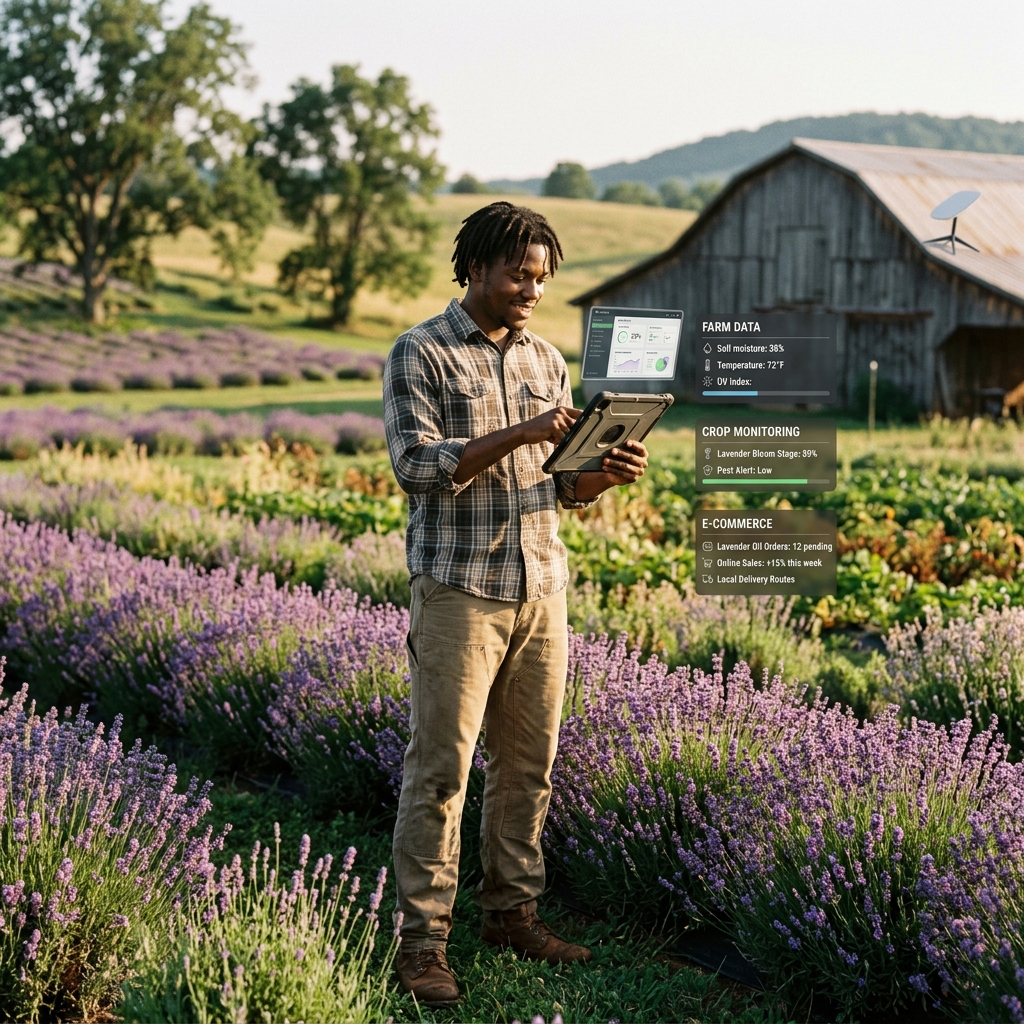
Internet Access

A hyper-locally connected agrobusiness platform. E-commerce, crop monitoring, education delivery — all from 66 acres.
Inputs: Satellite/broadband, electricity, devices
Outputs: E-commerce, training platform, data-driven farming, community reach
Spirit nurturing soul

Spirit

The intangible element that binds everything together. Purpose, healing, legacy, and the joy of seeing the system work.

Inputs: Community, nature, purpose, heritage
Outputs: Healing, peace, motivation, generational vision

Program Elements

Each piece connects to the others — infrastructure designed so every building, field, and path serves the circular system.

🌿

The Homestead

Residential headquarters. Where people live, plan, and manage the system. The command center of the 66 acres.

🌿

Event Center

Community hosting — weddings, workshops, farm dinners, intergenerational programs. Revenue that funds the system.

🌿

Animal Systems

Goats, chickens, geese, alpaca with shelter and controlled routes. Animals eating and managing the food forest — but what about winter?

🌿

Food Forest

Permaculture plantings that feed both animals and people. A living system where plants support each other and the whole farm.

🌿

Hemp Innovation Hub

Training center for 25,000+ hemp product applications. Research integration with NC A&T. The original "Leaf" in Re-Thinking The Leaf.

Re-Thinking The Leaf Corp — RTTLC Hemp Innovation

Hemp: 25,000+ Products

Hemp is one of the most versatile crops on Earth. We're building a training platform to teach its applications — from textiles to bioplastics.
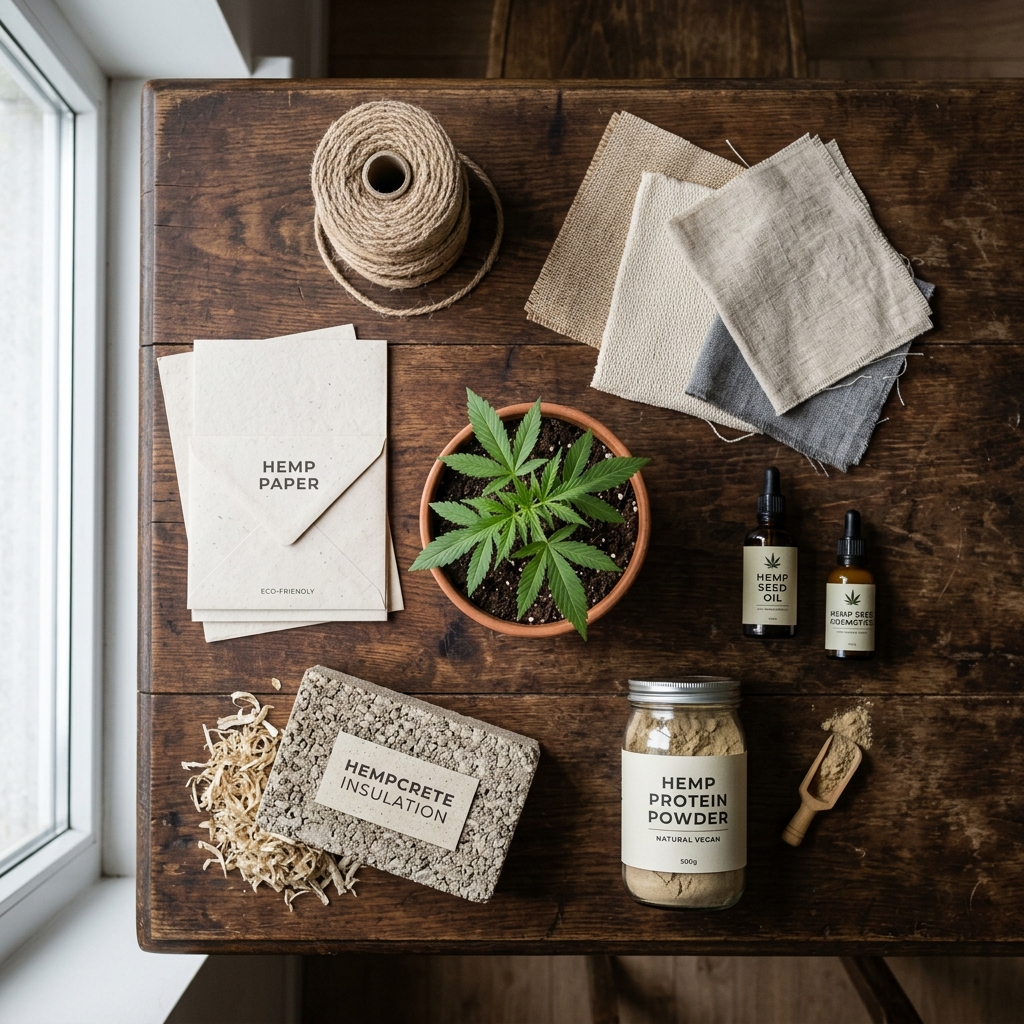
Hemp product versatility — 25,000+ applications
🌿
Textiles & Clothing

Durable fabrics, denim, shoes, bags, upholstery. Naturally resistant to mold and UV light.

🌾
Construction

Hempcrete, insulation, fiberboard, wall panels. Lightweight, fire-resistant, and breathable.

🌿
Paper & Printing

Stronger than wood pulp. Packaging, printing, and even currency-grade materials.

🌿
Food & Nutrition

Protein powders, cooking oils, dairy alternatives. Rich in essential fatty acids.

🌿
Health & Body Care

Lotions, soaps, shampoos, lip balms. Anti-inflammatory hemp seed oil.

🌿
Fuel & Industrial

Biodiesel, ethanol from hemp biomass. Ropes, sails, canvas — historic and modern uses.

🌿
Animal Products

Livestock bedding, pet treats, supplements from hemp oil and seeds.

🌿
Bioplastics

Biodegradable plastics, car interior panels. The future of sustainable materials.

"Has to be fun. See the system, play with it — not slave to it."
Why Hemp & Lavender?
The Science of Healing Land

Our crop selection isn't just beautiful — it's ecological engineering. Every plant on this estate serves a scientific purpose in restoring soil, cleaning water, and rebuilding biodiversity.

Phytoremediation

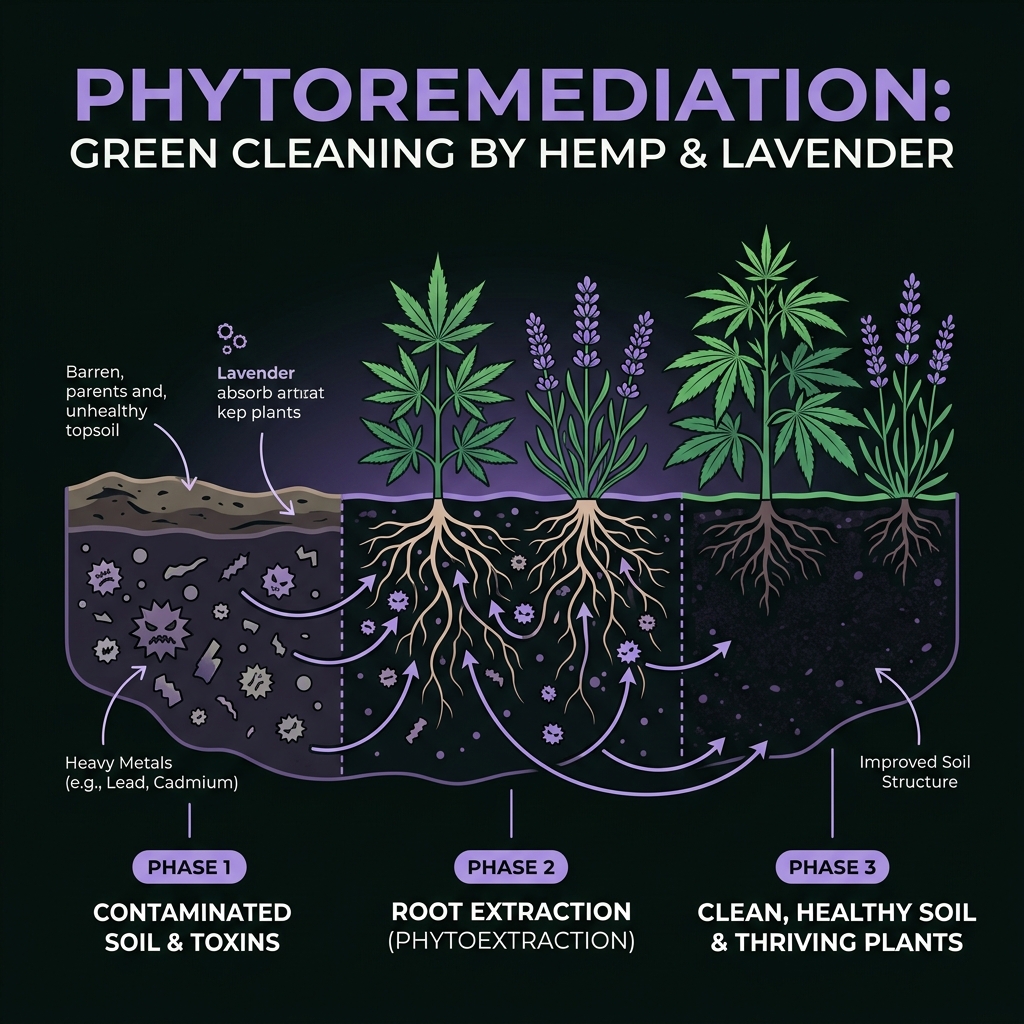
Phytoremediation is the use of living plants to clean contaminated soil, water, and air. It's nature's own cleanup crew — and hemp is one of its most powerful agents.

Industrial hemp (Cannabis sativa) sends roots 8—12 inches deep, absorbing heavy metals like lead, cadmium, and zinc from degraded soils. After the Chernobyl disaster, hemp was planted to extract radioactive isotopes from contaminated ground. On Virginia's former tobacco lands — many suffering from decades of chemical inputs — hemp does the same restorative work.

Lavender (Lavandula angustifolia) complements hemp by stabilizing topsoil, attracting native pollinators, and producing essential oils with proven therapeutic benefits. Together, they form a regenerative crop rotation that heals the land while generating revenue.

Phytoremediation diagram showing hemp and lavender roots cleaning soil
🌿

Hemp — The Hyperaccumulator

  • - Absorbs heavy metals (Pb, Cd, Zn, Ni) from soil
  • - Grows to maturity in 90—120 days
  • - Deep taproot breaks compacted clay subsoil
  • - Produces CBD oil, fiber, hempcrete, biofuel
  • - Sequesters 1.63 tons CO2 per ton grown
  • - No pesticides required — naturally pest-resistant
🌿

Lavender — The Pollinator Sanctuary

  • - Attracts 100+ native pollinator species
  • - Drought-tolerant once established
  • - Essential oils used in aromatherapy & wellness
  • - Anti-erosion ground stabilization
  • - Thrives in Virginia's Zone 7a/7b climate
  • - Revenue: $12,000—$30,000/acre potential
🌿

Hydroponics — The Future Farm

  • - 90% less water than traditional farming
  • - Year-round production regardless of season
  • - Zero soil disturbance — no tilling, no erosion
  • - 3—10x faster growth than field agriculture
  • - Microgreens, herbs, specialty crops
  • - Perfect STEM education demonstration tool
0
Tons CO2 sequestered per ton of hemp
0
Pollinator species attracted by lavender
0
Less water used in hydroponic systems
0
Acres under regenerative management

Education is the Seed
of Generational Wealth


Land Stewardship

Teaching sustainable land management, conservation practices, and ecological awareness to participants and adults alike. From soil health to wildlife habitats — understanding the land beneath your feet is the first step to owning it.

Economic Empowerment

Workshops on land value, ownership pathways, and turning acreage into a community asset. We demystify USDA grants like EQIP, AFID, and the Value-Added Producer Grant so you can fund your dream — not just dream it.

Phytoremediation Science

Hands-on demonstrations of how hemp cleans contaminated soil, how lavender supports pollinator ecosystems, and how hydroponic systems grow food without soil. Real science, real application, real impact.

Permaculture & Food Forest Design

Learn the art and science of permaculture — designing food systems that mimic natural ecosystems. Our food forest workshops cover seven-layer planting, companion planting guilds, soil biology, and how to create landscapes that feed families for generations without tilling or fertilizer.

Reading the Land

Before a single trail is cleared or cabin staked, we study what the land already knows. These maps tell the story of 66 acres — its slopes, soils, water, and ecological memory — so every design decision honors what's already here.

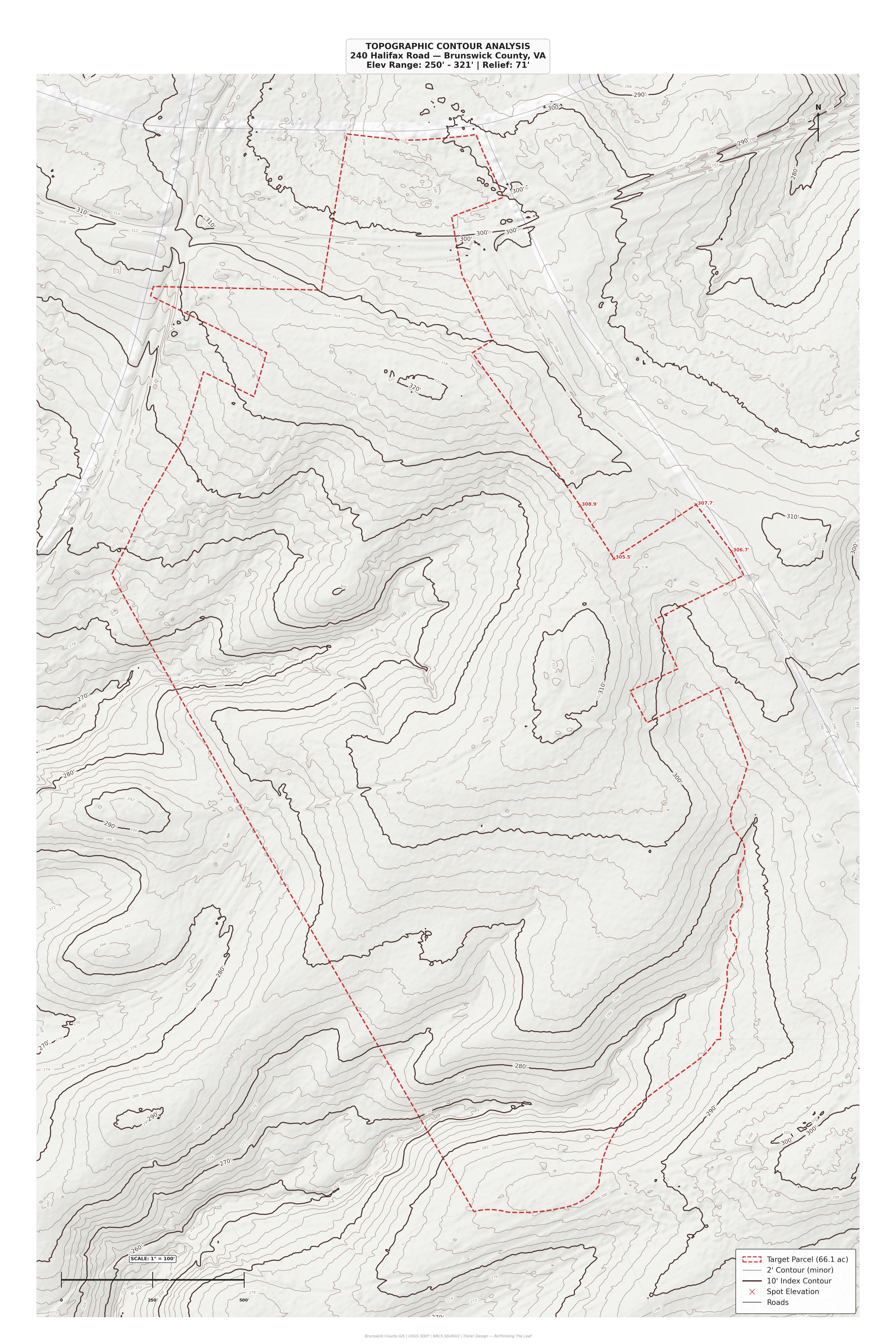
Topographic Contour Analysis — 240 Halifax Road
Topographic Contour Analysis

Understanding Elevation & Relief

The property ranges from 250' to 321' elevation with 71 feet of relief. Two-foot contour intervals reveal the ridge-and-valley character of the site — steep draws where water concentrates follow naturally toward the southeast. These landforms guided every zone placement: cabins perched on high ground, wetland classrooms tucked into the natural drainage.

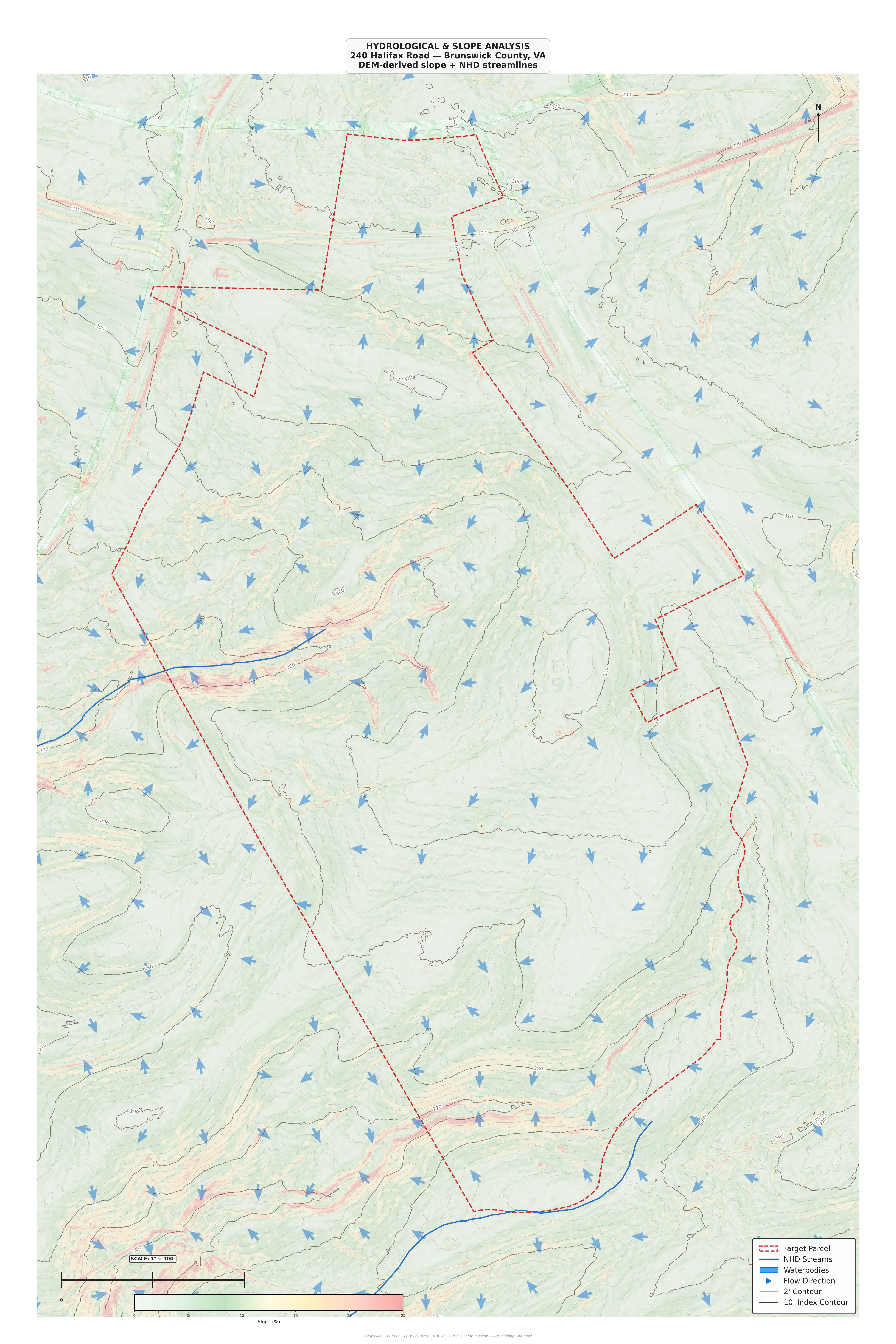
Hydrological & Slope Analysis

Where Water Flows, Life Follows

DEM-derived slope mapping overlaid with NHD streamlines and flow direction arrows reveal the property's hydrological fingerprint. Steep slopes (shown in red/pink) define the limits of development; gentle grades (green) identify buildable zones. The blue stream corridor threading south through the parcel is the spine of the entire wetland education zone.

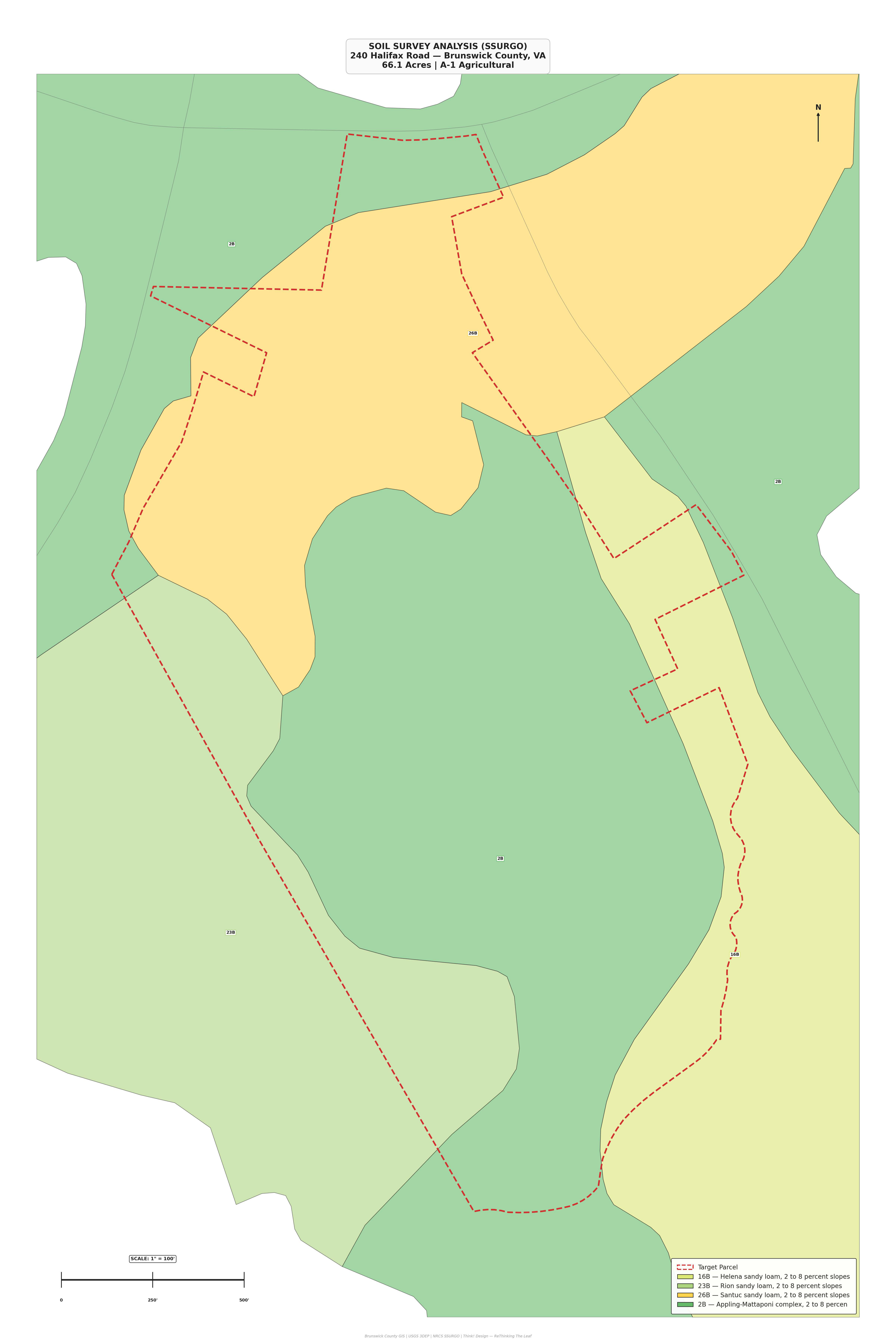
SSURGO Soil Survey Analysis
Soil Survey Analysis (SSURGO)

The Foundation Beneath

The USDA SSURGO survey reveals a mosaic of sandy loam soils across the parcel: Helena (16B), Rion (23B), Santuc (26B), and Appling-Mattaponi (2B) — all on 2—8% slopes. This is A-1 Agricultural land. The soil types directly informed where lavender can thrive (well-drained Helena loam) versus where wetlands naturally persist (Santuc loam in low areas).

Composite Ecological Analysis

The Complete Picture

Every layer combined — satellite imagery, topography, soils, hydrology, and flow direction — into a single composite view. This is how a landscape architect reads the land. The overlay reveals where mature pine stands anchor the soil, where cleared tobacco fields are ready for lavender, and where the natural stream corridor creates the perfect setting for boardwalks and outdoor classrooms. Design with the land, not against it.

Maps by Think! Design & Planning — USGS LIDAR + NRCS SSURGO + NHD Hydrography — Brunswick County GIS

Our Roots Run Deep

Rooted in Legacy

Re-Thinking The Leaf grows from soil rich with history — a region shaped by Black education, agricultural resilience, and a legacy of building something from the land.

1732

Brunswick County, Virginia

Established in 1732 and named after the House of Brunswick, this Southside Virginia county has been agricultural land for nearly three centuries. From tobacco plantations to today's small farms, the land has always sustained those who work it. Lawrenceville, the county seat since 1814, carries the quiet strength of a community that endures.

1888

Saint Paul's College

Founded in 1888 by James Solomon Russell, an Episcopal priest and the son of formerly enslaved people, Saint Paul's College stood for 125 years as a beacon of Black education in Lawrenceville. It produced teachers, ministers, and community leaders who shaped Southside Virginia. Though the college closed in 2013, its mission lives on — the belief that education transforms lives and lifts communities. Re-Thinking The Leaf carries that torch forward.

1908

Alpha Kappa Alpha Sorority, Inc.

Founded in 1908 at Howard University, Alpha Kappa Alpha became the first Black Greek-letter sorority — built on a foundation of scholarship, service, and sisterhood. For over a century, AKA women have been at the forefront of education, civil rights, and community uplift across America. Their legacy of service and excellence is woven into the fabric of HBCU culture and the communities they serve, including rural towns like Lawrenceville where education and empowerment go hand in hand.

1910

The Fight for Black Land

In 1910, Black Americans owned 16 million acres of farmland. By 2024, that number had fallen to under 2 million — a loss driven by discriminatory lending, USDA inequities, and systemic barriers. The National Black Farmers Association, headquartered just 15 miles away in Baskerville, VA, has fought for decades under John Boyd Jr.'s leadership to reverse that tide. RTTL is part of the counter-narrative: Black land being built up, not torn down.

2024

Re-Thinking The Leaf

On 66 acres of A-1 Agricultural land, a new chapter begins. We are building an agrotherapy estate that honors this region's agricultural heritage while looking forward — blending sustainable farming, renewable energy, and community wellness into a living classroom. From the legacy of Saint Paul's to the spirit of AKA service, from the fight for Black land to the promise of a regenerative future — the leaf is being rethought.

Building the Vision — Phase by Phase

Rome wasn't built in a day. This 66-acre sanctuary is being developed purposefully over time — each phase unlocking new experiences and revenue streams.

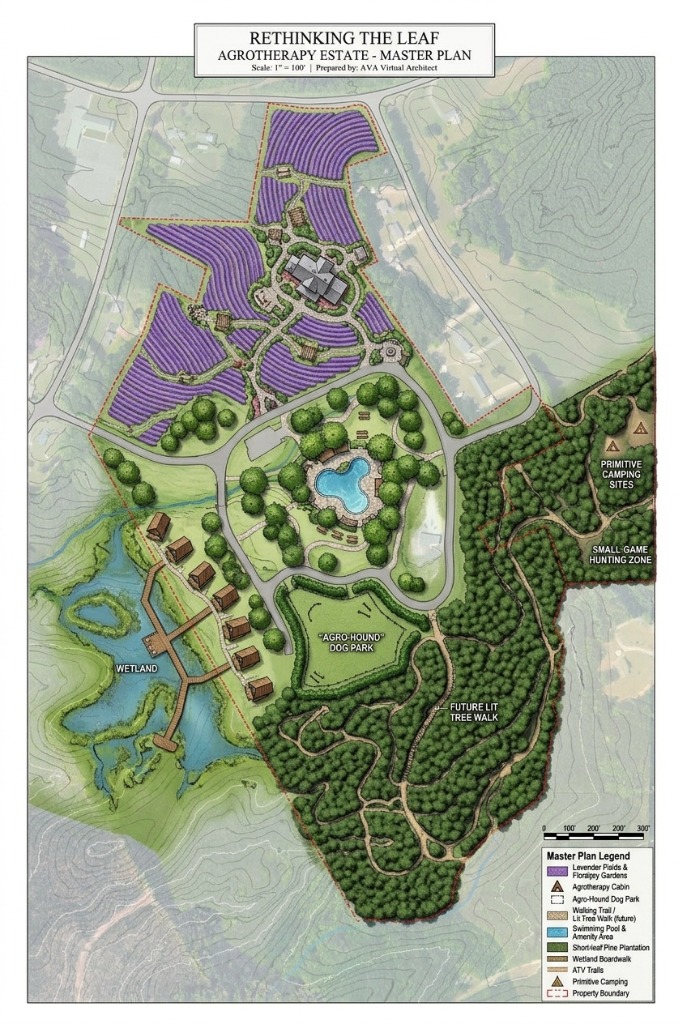
Re-Thinking The Leaf Agrotherapy Estate — Master Plan by AVA Virtual Architect

DRAFT — Agrotherapy Estate Master Plan — 240 Halifax Road — 66.26 Acres — Prepared by AVA Virtual Architect for Think! Design & Planning

Zone 1 — Floralpy Entrance
Zone 2 — Cabin Resort
Zone 3 — Central Amenities
Zone 4 — Agro-Hound Park
Zone 5 — Pine Recreation
Zone 6 — Private Enclave
Zone 7 — Circulation Loop
Phase 1 — Year 1—2

Foundation & First Harvest

  • Lavender field planting over leach field zone
  • Trail clearing through 30-acre pine plantation
  • Dog park fencing and amenities
  • Website launch and digital presence
  • Community network activation
Phase 2 — Year 2—4

First Cabins & Education Campus

  • First 2—3 A-frame cabins constructed
  • Wetland boardwalk and outdoor classrooms
  • Farm store build-out with local goods
  • Essential oil processing from lavender
  • Intergenerational science and farming workshops launch
  • ATV trail network completion
Phase 3 — Year 4—7

Full Resort & Digital Twin

  • Full cabin resort expansion (up to 10 A-frames)
  • Pool and community gathering spaces
  • Lit Tree Walk through mature pine canopy
  • 3D digital twin for virtual tours and VR
  • Event hosting and wedding venue capability
  • Education center with full workshop facility

Explore the Farm in 3D

Walk the land from anywhere. This 3D scan was captured by drone, stitching together 2,108 images of the actual 66-acre estate. Rotate, zoom, and explore every acre.

Created with RealityScan by Epic Games — 2,108 drone images — by ncatlandarch